Local Emergency Situation: Oregon, OH Weather Vulnerability
Bordering Maumee Bay and Lake Erie directly to the east of Toledo, Oregon, OH experiences the harshest maritime meteorological exposure in Northwest Ohio. Unobstructed maritime gale winds sweep directly off Lake Erie, driving horizontal precipitation beneath shingle edges, dislodging unsealed ridge caps, and driving freezing spray into attic gable louvers and ridge vents. When severe weather breaches a building envelope in Oregon, every minute of delay multiplies the extent of internal water damage. Trapped moisture compromises cellulose insulation, weakens structural joists, and fosters microbial growth inside wall cavities within 24 to 48 hours.
Standard Emergency Field Protocol for Oregon Properties:
- Immediate telephone intake triage to assess structural water ingress vectors and active ceiling hazards.
- Mobilization of on-call Oregon-area crews equipped with timber-batten tarps and non-destructive FLIR diagnostic cameras.
- Deployment of emergency envelope weatherproofing to prevent interior water inundation during active precipitation.
- Comprehensive Ohio Residential Building Code Chapter 9 compliance inspection and detailed digital photographic documentation for property insurance validation.
1. Oregon Severe Weather & Storm Exposure
Properties across Oregon face severe seasonal weather swings characteristic of Northern Ohio. In winter, sub-freezing temperatures combine with heavy snowfall to produce destructive ice dams along unheated roof eaves. Meltwater backed up behind ice ridges penetrates under shingle courses and leaks into interior living spaces. In summer and transitional seasons, violent thunderstorm downbursts generate severe localized winds and hail that tear shingles away, dislodge flashing, and drive water through vulnerable chimney and valley junctions.
Key Engineering & Repair Protocols for Oregon Homes:
- Lake Erie Coastal Gale Resistance: Heavy-duty Class 4 impact and Class H wind-resistant shingles secured with stainless steel or hot-dipped ring-shank fasteners.
- Full-Deck Ice & Water Barrier Shielding: Complete deck coverage of ASTM D1970 self-adhering modified bitumen underlayment on shallow-pitch shoreline roof designs.
- Baffled Weather-Tight Ridge & Intake Ventilation: Specialized baffled ridge vent systems that prevent wind-driven horizontal snow and driving rain infiltration.
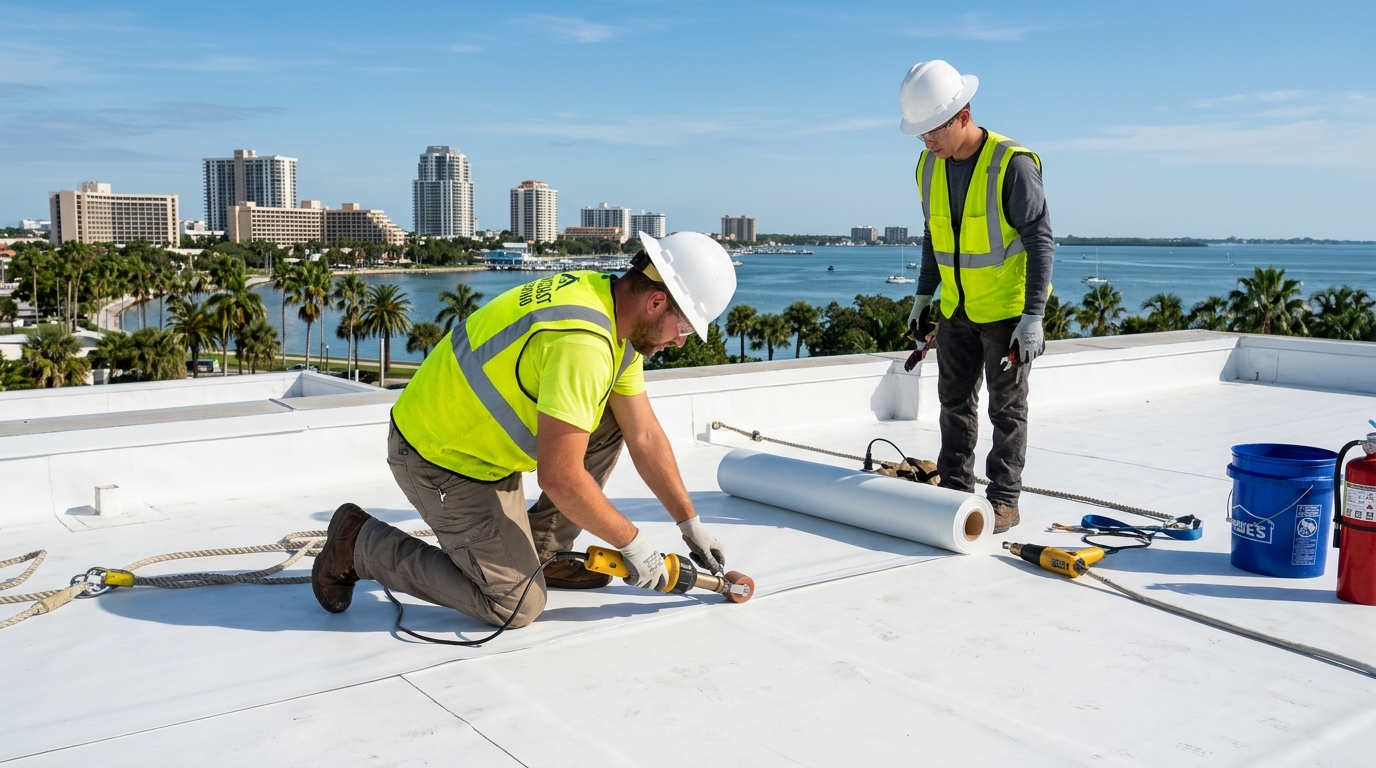
- Commercial Flat & Low-Slope Membrane Welding: Hot-air robotic seam fusion for low-slope commercial properties and sunrooms vulnerable to standing lake-effect snow.
2. Non-Destructive Moisture Diagnostics & FLIR Thermal Tracing
Rather than relying on invasive exploratory drywall cuts, independent contractors dispatched through Roof Expert USA utilize calibrated FLIR® thermal imaging instruments and non-destructive dielectric moisture meters. Thermal imaging detects the subtle evaporative cooling signatures created by wet insulation and saturated framing within finished ceilings and walls.
This diagnostic rigor allows technicians to trace hidden water intrusion paths from the interior drip location back to the exterior roof breach with surgical accuracy, ensuring that all compromised materials are identified and remediated without unnecessary structural demolition.
3. Step-by-Step Substrate Restoration Methodology in Oregon
Restoring a compromised roof deck in Oregon requires meticulous multi-stage construction standards:
- Step 1: Emergency Physical Stabilization: Securing heavy-duty 10-mil woven poly tarps with 2x4 framing lumber screwed into rafters to resist Northwest Ohio wind gusts.
- Step 2: Substrate Removal & Sheathing Inspection: Stripping storm-damaged roofing materials down to wood decking to inspect for moisture delamination, dry rot, and fastener pullout.
- Step 3: Decking Reinforcement & Ice Barrier Installation: Replacing deteriorated sheathing with exterior-rated CDX plywood, followed by full-coverage application of ASTM D1970 self-adhering SBS modified bitumen ice barrier.
- Step 4: Shingle Application & Precision Flashing Integration: Installing high-wind architectural shingles using 6-nail fastening patterns, paired with commercial-grade polyurethane counter-flashing sealants along all vertical masonry transitions.
4. Building Code Compliance & Contractor Licensing in Lucas County
All roofing restoration projects dispatched through our network adhere strictly to the Residential Building Code of Ohio (RCO Chapter 9), City of Oregon municipal building codes, and Lucas County building inspection requirements. Dispatched contractors carry active municipal registrations, Ohio Bureau of Workers' Compensation coverage, and comprehensive commercial general liability insurance policies of at least ,000,000.
5. Preventative Property Maintenance & Winter Preparedness
Property owners in Oregon can protect their roofing investment and minimize winter emergency risks through disciplined maintenance:
- Attic Ventilation Balancing: Verify that soffit intake baffles and ridge exhaust vents maintain balanced continuous airflow to keep roof deck temperatures cool during winter.
- Gutter Debris Removal: Ensure gutters and downspouts are cleaned every autumn to prevent drainage backups and heavy ice accumulation.
- Overhanging Tree Canopy Trimming: Cut back heavy tree branches located within 10 feet of the roofline to prevent puncture damage during severe windstorms.
- Annual Forensic Inspection: Schedule an annual pre-winter roof inspection to verify flashing seals, pipe boots, and ridge caps before sub-zero temperatures arrive.
Need Immediate Roof Leak or Storm Repair in Oregon?
Zero web forms, waiting queues, or automated callbacks. Connect instantly with live dispatch to mobilize an on-call licensed roofing team to your Oregon home or business.
CLICK TO CALL OREGON DISPATCH: (888) 208-4155